The Coast · Côte d’Opale · ports
The Channel Ports You Keep Driving Past
Four French towns reduced to a fuel stop and a roundabout — at least two of them deserve better.
Filed at
4A few people, no crowd.
Four French towns reduced to a fuel stop and a roundabout — at least two of them deserve better.
What You Miss When You Floor It
The dash south is understandable. You've been on a ferry, the kids are restless, the autoroute is right there. Calais, Boulogne, Dieppe, Dunkerque — all four get used as verbs rather than destinations. But the logic of speed is also the logic of never arriving anywhere, and two of these towns repay a pause long enough to actually use them.
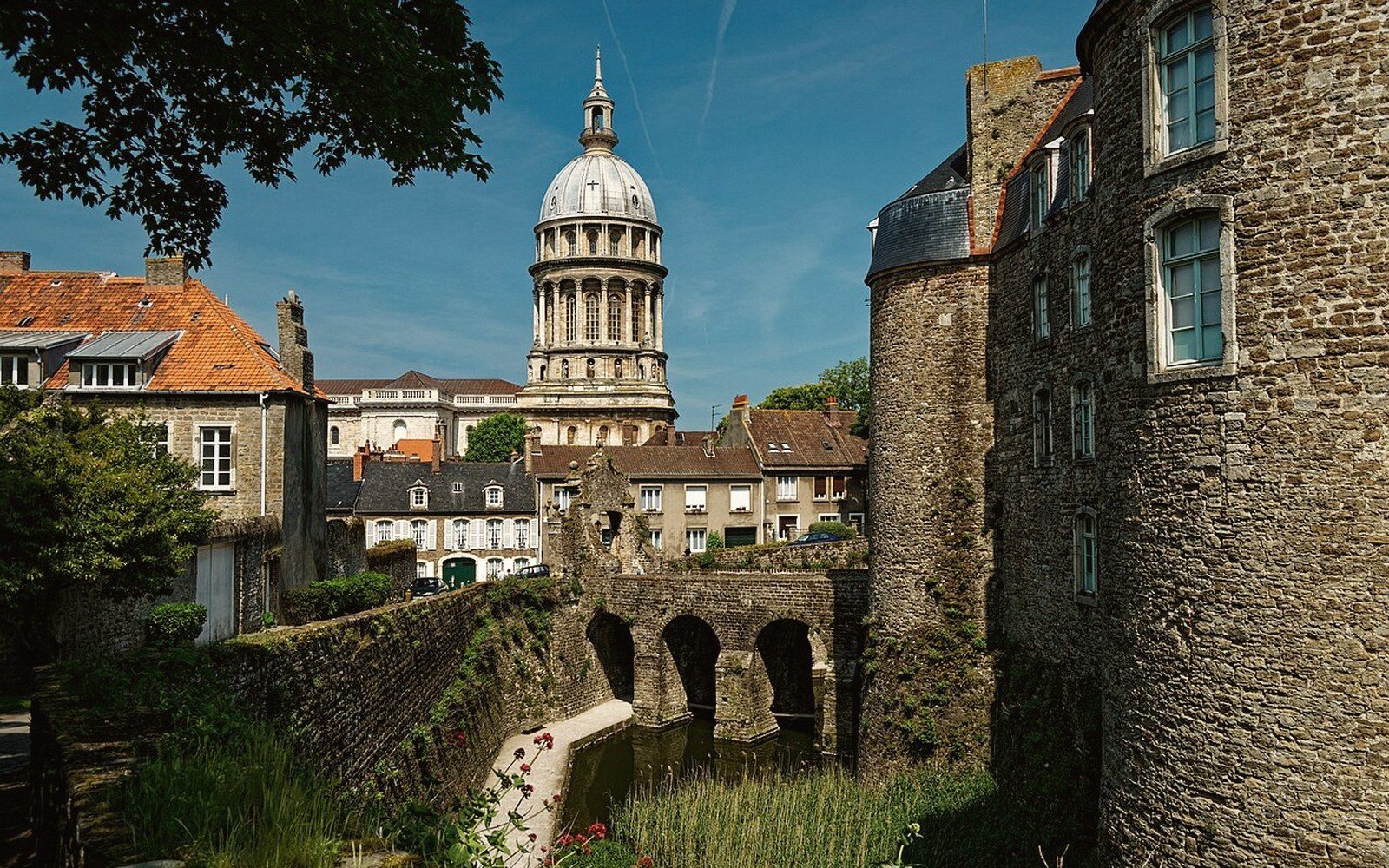
Boulogne-sur-Mer makes the strongest case. The lower town around the harbour is unremarkable, but the upper town — the haute ville, a walled medieval enclosure on the hill above — is a genuinely intact piece of old France: cobbled streets, a nineteenth-century basilica with a medieval crypt that predates the current building, ramparts you can walk completely around in under half an hour. Almost nobody does, because almost nobody stops. The Nausicaá aquarium down on the waterfront is serious enough to justify a detour on its own terms — it is one of the largest marine centres in Europe and treats its subject without condescension. Boulogne also has a daily covered market and a fishing port that still lands real catch. The town smells of the sea rather than of tourism.
Dieppe is the other genuine case. It was the first Norman seaside resort, which means it has bones — a proper château-museum on the clifftop, a long seafront boulevard that predates the postcard idea of a beach town, and a Saturday market in the Grande Rue that local people actually use. The raid of August 1942, in which Allied forces — predominantly Canadian — suffered catastrophic losses on that beach, is remembered seriously at the mémorial on the seafront. The town has a melancholy that suits it. It does not perform cheerfulness.
Calais and Dunkerque are harder sells, though not dishonest ones. Calais has Auguste Rodin's Les Bourgeois de Calais in front of the town hall — the original cast, which most visitors to the Musée Rodin in Paris have already seen a copy of — and a Flemish belfry that climbs high enough to reframe your sense of the flat land all around. Dunkerque's wartime history is visceral and the maritime museum is the kind of place that detains you longer than planned.
None of this requires a week. Boulogne and Dieppe each work as an overnight — a bed, a meal, a morning walk before you continue south. The Atlantic coast ahead of you isn't going anywhere. The channel ports are the part of France you've been in a hurry to leave without knowing what they were.
The four ports at a glance4 entries
- Boulogne-sur-Mersplit town: working harbour below, intact medieval haute ville above; strongest case for an overnight
- DieppeNorman resort with real history, Saturday market, significant Second World War memorial on the seafront
- CalaisRodin's Les Bourgeois de Calais (original cast) at the town hall; Flemish belfry; mainly transit
- Dunkerquewartime history, maritime museum; rewarding if you let it detain you
Terms used4 entries
- haute villeupper town, the medieval walled enclosure above Boulogne's harbour district
- château-museumcastle repurposed as a regional museum, common form in Norman towns
- mémorialmemorial site; in Dieppe's case, the seafront commemoration of the 1942 raid
- Les Bourgeois de CalaisRodin's 1889 sculpture group commemorating six citizens who offered their lives to spare Calais during the Hundred Years' War
Boulogne also has a daily covered market and a fishing port that still lands real catch.