The Coast · Finistère · headland
Crozon: Where the Road Stops Pretending
The Presqu'île de Crozon juts into the Atlantic like a finger pointing at nothing — dramatic, exposed, and genuinely inconvenient to reach. That last quality is doing more work than it seems.
Filed at
3A few people, no crowd.
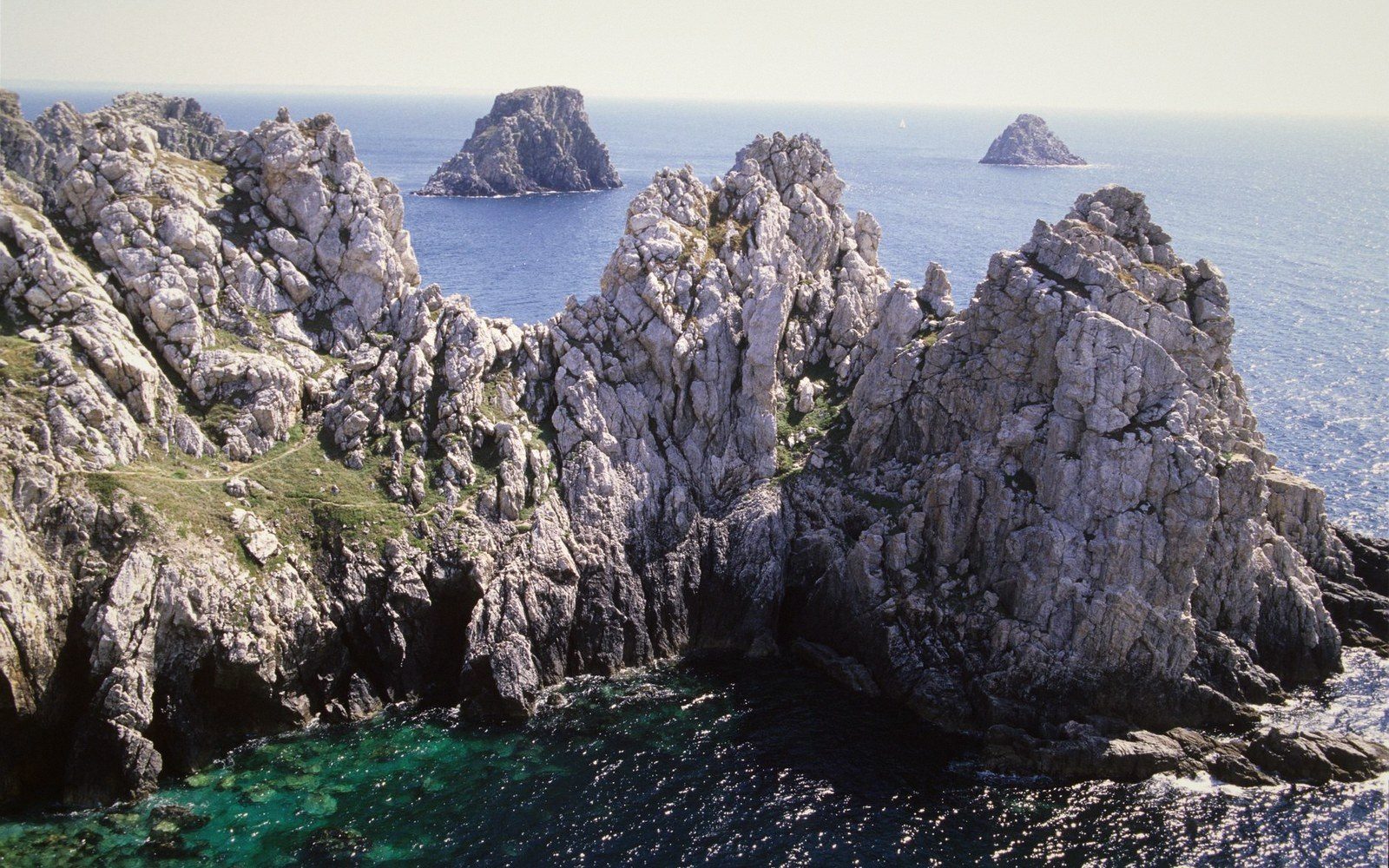
The Presqu'île de Crozon juts into the Atlantic like a finger pointing at nothing — dramatic, exposed, and genuinely inconvenient to reach. That last quality is doing more work than it seems.
The Shape of the Thing
Finistère — the name means land's end — earns its title most completely on the Presqu'île de Crozon, a broad triple-pronged peninsula that extends from the Armorique Regional Natural Park into the Atlantic south of Brest. The landmass is not especially large, but it reads as remote because the geometry forces it. A narrow neck of land attaches it to the mainland, and from that neck the road branches to three separate headlands: Pointe de Pen-Hir, Pointe des Espagnols, and the tip at Cap de la Chèvre. Each branch is a commitment. You drive out, you turn around, you drive back. There is no loop, no shortcut, no way of treating the place as a corridor to somewhere else.
That structural dead-end is the presqu'île's defining quality. The landscape rewards it: cliffs that drop sheer into green Atlantic water, the folded rock strata at Pen-Hir exposed in section like a geology textbook left open on a shelf, the worn columns of Les Tas de Pois — literally the stacks of peas, though nothing about these sea stacks is pea-sized — rising just offshore in a formation that stops most people mid-sentence. The colours shift with every cloud passing: khaki moorland, bruised slate, white water. In midsummer they're half-buried under parked cars and orange cagoules. In late autumn or early spring, they belong to the weather again.
What the landscape is made of4 entries
- presqu'îlepeninsula (literally "almost island"); Crozon is attached to the mainland by a narrow isthmus
- Armorique Regional Natural Parkthe protected area enclosing the peninsula and much of inland Finistère
- Les Tas de Poissea stacks off Pointe de Pen-Hir; the name translates as "the stacks of peas"
- Finistèrewesternmost département of Brittany; name derives from the Latin Finis Terrae, land's end
Getting Here and What That Costs You
The peninsula sits about thirty kilometres south of Brest as the crow flies, and considerably more as the road goes. Brest is reachable by TGV from Paris in just over three and a half hours, which is the easy part. From Brest to Crozon, the public transport options are limited and seasonal — serviceable enough for the patient, genuinely inconvenient for anyone carrying luggage or planning to move between headlands independently. The honest advice is that without a car, you will see one part of the presqu'île well and the rest not at all.
That difficulty is not a bug in the destination's logic. The Presqu'île de Crozon has roughly the same cliff drama as more famous Atlantic headlands and considerably fewer people discovering it on the same Tuesday afternoon. The effort-to-revelation ratio runs steep in the traveller's favour. Crozon town itself — the administrative centre — is functional rather than picturesque, worth understanding as a base rather than a destination. Morgat, a couple of kilometres south, has the more sheltered harbour and a seafront that feels genuinely lived-in.
What the Weather Actually Does
Finistère has a reputation for rain that is partly accurate and partly a product of its name's romantic fatalism. The presqu'île is exposed on three sides and the Atlantic delivers weather without warning — a morning of startling visibility followed by an afternoon that turns horizontal without consultation. What this means in practice is that any plan should be held loosely and the cliffs walked whatever the conditions, because mist and rain do something useful to a headland: they strip away the brochure version and return the place to its own scale.
The light when it comes — and it does, even in November — has the scoured quality particular to places that have been washed clean by recent rain. The heather on the moorland plateau above Pen-Hir, the rusted iron in the exposed rock, the surface of the sea changing colour in minutes: these are not things that photograph well, which is part of why the place retains its character. The Presqu'île de Crozon cannot be reduced to a single image and filed. It requires presence, and it requires time, and it is considerate enough to have made itself difficult to reach so that only people who understand those terms generally show up.
The road really does stop pretending somewhere around the second headland. Past that point it is just the cliff, the wind, and the Atlantic asserting itself in the old, indifferent way.
The colours shift with every cloud passing: khaki moorland, bruised slate, white water.